

 First Do No Harm
(1997)
Directed by Jim Abrahams
Written by Ann Beckett
Starring Meryl Streep, Fred Ward, Seth Adkins, Allison Janney, Margo Martindale, Oni Faida Lampley, Leo Burmester
Pebblehut Productions, Jaffe/Braunstein Films
Rating: PG-13
| Nursing rating |  |
| Artistic rating |  |
| Rating guide: excellent = 4 stars; good = 3 stars; fair = 2 stars, poor = 1 star |
|
Guest review by Kim Sampson, RN
Headline
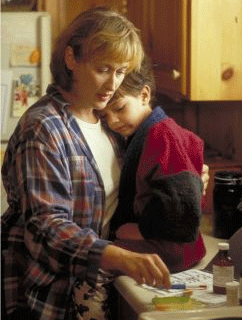
In the film First, Do No Harm, we are introduced to a small town, midwestern family whose lives are shaken by the youngest son's newly diagnosed epilepsy. Meryl Streep adroitly plays Lori Reimuller the mother, who at first is devastated and in denial of her son's health condition. As time and the boy's seizures continue, despite various medications tried by the consulting neurologist, mother Lori Reimuller becomes desperate for better solutions or a cure. Along with the stress of the son's illness, the family must also contend with mounting health bills and an insurance policy about to run out because the father recently switched jobs.
During frequent hospitalizations, we find the mother educating herself on epilepsy and advocating for her son with both physicians and nurses. Unsurprisingly, the physicians are portrayed as having all the answers, when, indeed, they don't. Meanwhile, the nurses are split in their depictions with mom. In one scene, when the little boy suffers from his umpteenth seizure on a medical floor, the nurses stand helplessly by, saying nothing and doing nothing, as his mother picks him up and carries him back to his bed. Real nurses would have perfomed a follow up "postictal" neurological exam on the boy and have taken vital signs, assessed his airway, given oxygen, measured an oxygen level, examined the boy's mouth for oral trauma and provided continuous monitoring until they were certain he was stable. But not in the movie. The nurses were absent.
But the depiction of nurses improves somewhat later when a nurse in the intensive care setting intelligently answers questions and advocates for both the patient and his mother. Please explain more about this scene__________. Eventually, the family's insurance runs out. But meanwhile in the mother's ongoing self education, she learns about the ketogenic diet and chooses to follow this plan, despite that it is an unconventional and controversial treatment, and despite the recommendations of the neurologist that her son continue on with traditional therapies. To this end, Lori Reimuller makes the needed arrangements to fly she and her son to Baltimore for the uncertain new treatment. In addition to asking an old friend, a retired physician, to accompany them, she also asks ____, the ICU nurse to come with them in the event the boy needs an IV started ___explain more about why Lori wanted her to come___. Streep feels her physician friend hasn't had any recent bedside experience starting an IV. Does the nurse do anything elso notable or significant on this trip?
After a few short years on the dietary regimen, we learn the little boy eventually becomes seizure free. His return to normalcy and seizure free state from the diet, along with others embracing this program, is cited at the end of the movie, giving hope to those not well served by traditional antiepileptics. We should end on a summary of how nurses were portrayed in the film.
Reviewed by Kim Sampson, RN
Reviewed April 26, 2011
The views expressed herein do not necessarily reflect those of the Board Members or Advisory Panel of The Truth About Nursing.



Educate the world that nurses save lives!
