


Nurse shortage gets serious; hospital reopens union deal
Modern Healthcare
Story originally published August 9, 2004 http://www.modernhealthcare.com/article.cms?articleId=33405
Click directly to section with quotes from the Center for Nursing Advocacy
Fletcher Allen Health Care in Burlington, Vt., has upped the ante in nurse recruiting. The state's largest hospital wants to make nursing attractive enough to lure former registered nurses back from other healthcare sectors or even other industries. To hire 100 nurses in the next 100 days, it is partnering with the Vermont Federation of Nurses and Health Professionals to send recruiting letters to every nurse with an active license in Maine, Massachusetts, New Hampshire and eastern New York.
Once nurses respond, Fletcher Allen officials want to sweeten the deal. They're offering a $6,000 bonus to former Fletcher Allen nurses who come back to work full time and a $6,000 bonus to temporary nurses who accept staff posts.
Most unusually, the hospital plans to reopen discussions with the nurses' union halfway through the current three-year contract to increase wages and benefits.
Mary Botter, Fletcher Allen's chief nursing officer, says she doesn't expect nurses hired through the latest campaign to leave hospital jobs for Fletcher Allen; rather, the campaign is aimed at attracting nurses who have left nursing because they can't find flexible schedules or because they're working in home health or in the insurance, law or other industries. "One of the reasons we have a nursing shortage in hospitals is that nurses are choosing to go into other types of positions," Botter says. "We need to make it more attractive for nurses to come back and work in hospitals."
Those who have stayed in nursing have long been dressing down, embracing a wide range of colors, styles and materials that leave them almost unidentifiable to patients. Many experts fear that "nurse casual" isn't the best look to help RNs get more respect as health professionals.
One solution: Make 'em wear white.
At Grady Memorial Hospital in Atlanta, some 1,100 RNs and licensed practical nurses working in clinical settings will be required to go retro, wearing old-fashioned white uniforms.
"The traditional white nursing uniform immediately identifies the professional nurse and at the same time conveys competency, professionalism, commitment and caring," says Rhonda Scott, Grady's chief nursing officer. Scott implemented a similar uniform change at South Fulton Medical Center in Atlanta two years ago. The uniform policy improved patient satisfaction and physician relations while serving as a valuable recruitment tool, Scott says.
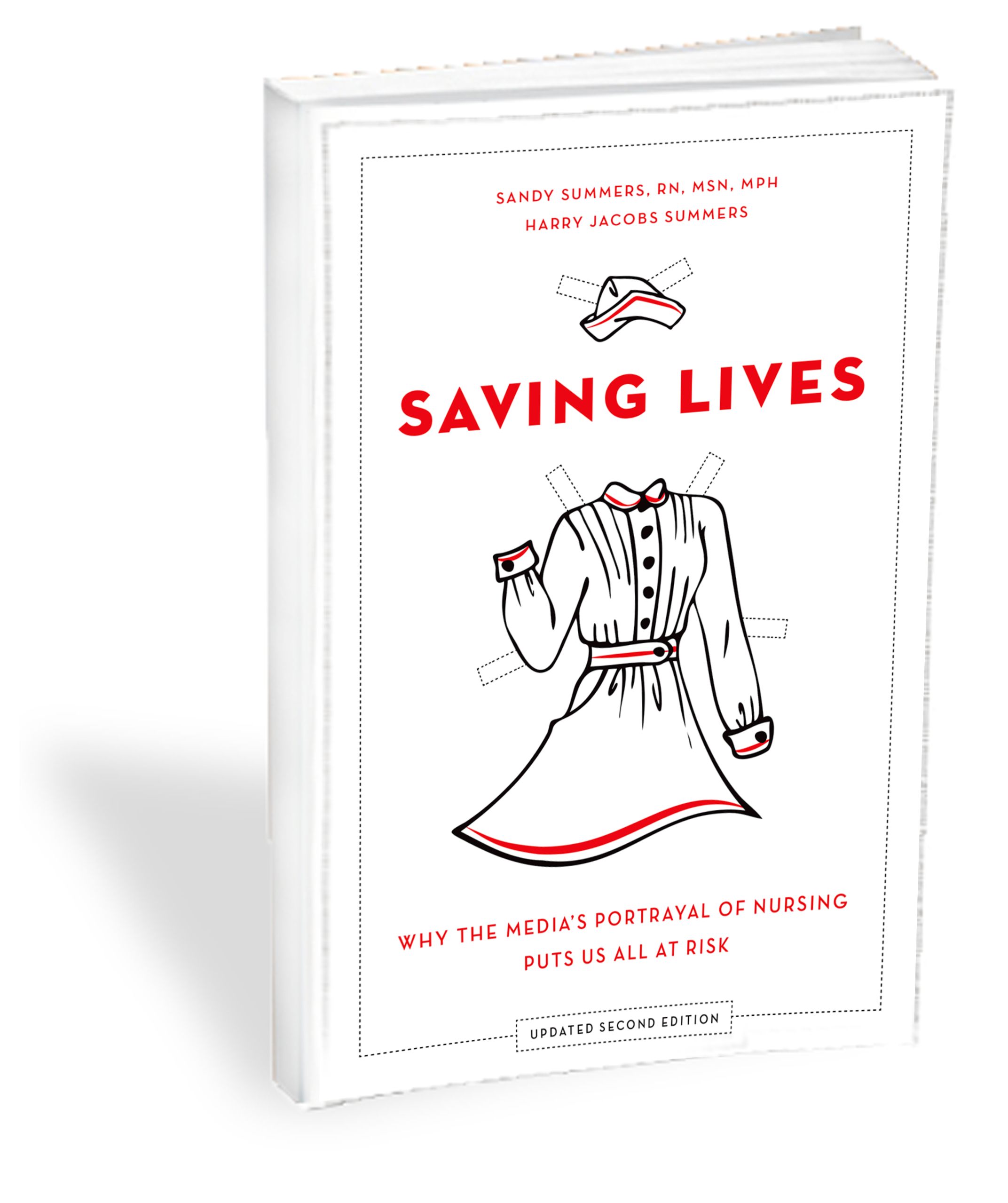
"It's great that nurses are realizing that we have an image problem that needs to be solved," says Sandy Summers, executive director of the Center for Nursing Advocacy in Baltimore. She wants to coordinate an effort at hospitals nationwide to standardize nurse uniforms according to level of education, perhaps akin to the color-coded hierarchical system used in the military. A sign with a key to the various nursing levels-LPNs, RNs and so forth-could be posted in the lobby to instruct patients, she says.
"Nurses should get credit and take credit for their education," Summers says. "Although it's tacky to list your credentials, we need to do that to get people to understand that we're not just your mom or your sister stumbling into the hospital to hold your hand. We're educated."
Got the malpractice blues
Sam Bierstock, master of the musical healthcare parody and serial punster, has a new band with a new cause.
The physician, profiled twice in Outliers in the late 1990s, plied the healthcare convention circuit with Dr. Sam and the Managed Care Blues Band, which used humor to raise awareness of the problems doctors face in dealing with HMOs. Now that HMOs are no longer the bogeymen they once were, Bierstock has formed Dr. Sam and the Frivolous Action Blues Band, which has a nine-track CD called "Goin' Bare," and is ready to hit the road again to raise public awareness about the national medical malpractice insurance crisis.
Most people, if you tell them doctors are hurting financially, will shrug you off, the assumption being that all physicians are wealthy, Bierstock says. "But I can write a song and get people to understand the reason you can't have an obstetrician in your community is that they can't afford $150,000 in premiums," he said.
Some song titles include "They've Got Deep Pockets, Let's Sue," and "A Ploy Called Counter Sue."
Taxing le junk food
Many Americans think of the French as being able to eat, drink and smoke to their hearts' content while remaining thin enough to wear the latest fashions and look good doing so.
Well, think again. Rising youth obesity has led the French parliament to pass a measure banning soda and junk food vending machines from public schools as part of a broad campaign to slow the trend toward overly grand children. French youths are getting steadily plumper, with 16% to 19% of them considered obese.
Sweetened alcoholic beverages, which are popular among youths, will get hit with a still-to-be decided but "dissuasive" tax as part of the new law, lawmakers said. France's legal drinking age is 16.
Snack food and soft drink manufacturers, meanwhile, will have the option of including health warnings on televised advertisements or paying a tax that amounts to 1.5% of their ad budgets.



Educate the world that nurses save lives!
